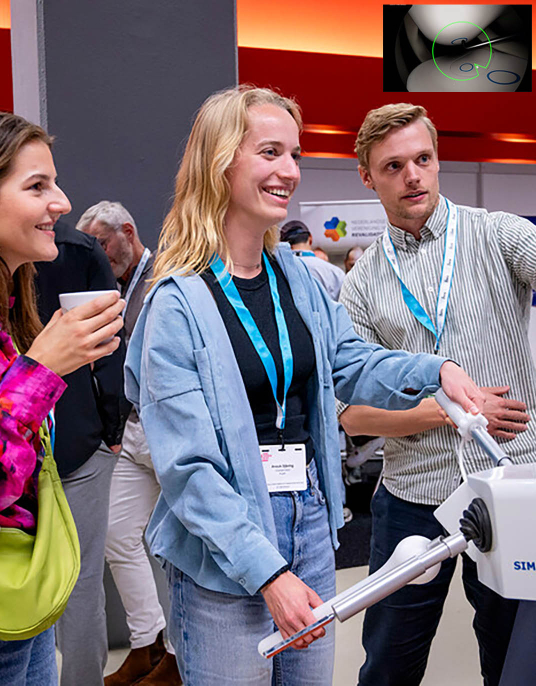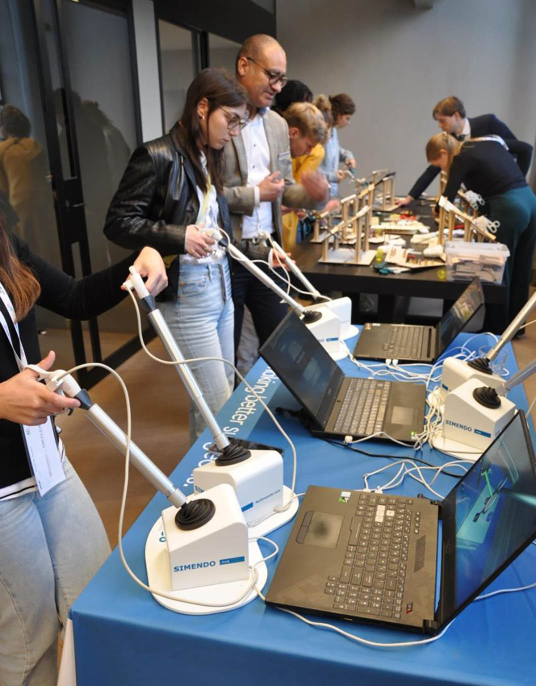
Attend our workshops to upgrade your skills!

Next workshop sheduled on Wednesday 8 July

Click here to register

In response to increasing demand, we have launched a pilot program offering workshops based on registration.
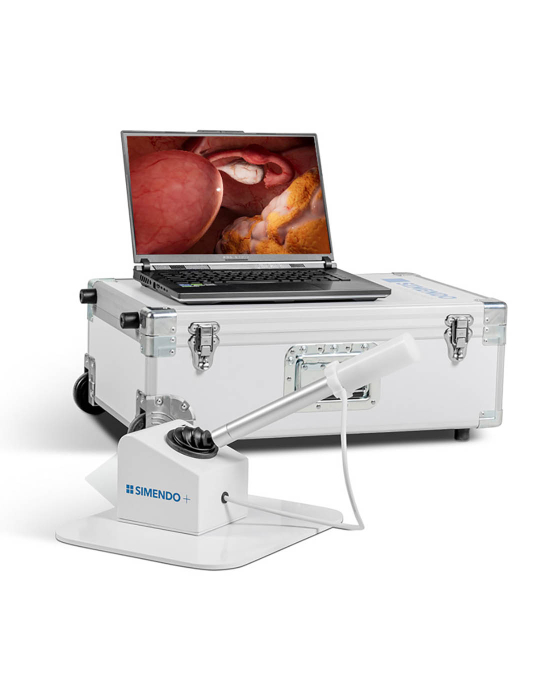
This workshop is intended for anyone who wishes to improve their skills and does not have access to a Simendo simulator. With this pilot, we aim to respond to the many requests we have received.

Various Simendo training programs are offered for laparoscopy and arthroscopy.
For laparoscopy, you can train basic skills ranging from simple to highly complex procedures.

See our workshops in action, follow us on Instagram

Laparoscopic training

Simendo VR

Camera training

Knee and shoulder arthroscopy

What kind of training?

On the left site you’ll find a short summary of the training we offer during the workshop. For a more detailed description o all the modules please scroll down.

Register for this workshop
Workshop for laparoscopists and scrub nurses

Workshop for laparoscopists and scrub nurses

Basic Skills training
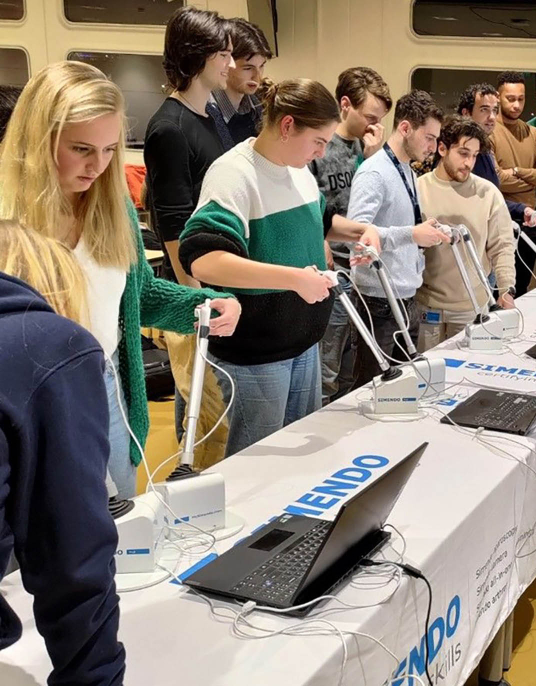
For laparoscopy, the Basic Skills training provides access to the novice, intermediate, and bi-manual curricula. These are scientifically validated training programs designed to develop your laparoscopic basic skills at all levels.


The novice curriculum is specifically designed for the beginning laparoscopist. In the intermediate curriculum, you learn to work with two instruments simultaneously. If this is not challenging enough, you can progress to the bi-manual curriculum, where you train the most complex skills that are rarely or not available elsewhere.


Suturing
You will receive an introduction to learning intracorporeal knot tying and will be able to practice this on the simulator


Laparoscopic Cholecystectomy
In addition, you will be introduced to three key steps required during a laparoscopic cholecystectomy, which you can then practice on the simulator. We begin with creating the Critical View of Safety, followed by the correct placement of clips and transection of the cystic duct and cystic artery. Finally, we train the dissection of the gallbladder from the liver bed using coagulation.


Salpingectomy
You will also receive an introduction to training the steps required during a salpingectomy, which can likewise be practiced on the simulator.

Register for this workshop
Simendo VR

Simendo VR

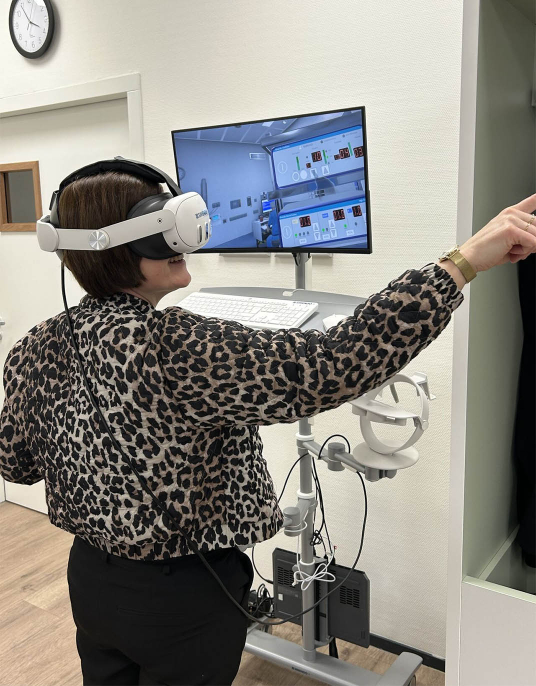
This module consists of two sections: laparoscopic training in the operating room and patient preparation.


When you are ready to take the next step in training laparoscopic skills, this is the right place. With Simendo VR, you can train in a virtual operating room where you can set up the OR yourself, adjust patient positioning (height and angle), configure equipment, and learn to manage alarms and distractions.


In addition to surgical skills, you can also train operating room assistant tasks. You can prepare the patient prior to surgery, including draping the patient, sterilizing with brush and betadine, selecting specific procedures and marking the corresponding portals, choosing the appropriate trocars, and selecting the required instrumentation.

Register for this workshop
Camera Training

Camera Training

A novice laparoscopist is often first tasked with operating the laparoscope while assisting during surgery. To ensure adequate preparation, this skill can be effectively trained on the Simendo simulator.


We offer a comprehensive training package for both the 0-degree and 30-degree scopes, with a wide variety of exercises designed to improve the required skills.


Upon completion of a curriculum, the trainee receives a digital certificate as proof of successful completion.

Register for this workshop
Workshop for orthopedics

Workshop for orthopedics

If you choose our arthroscopy simulator, we will teach you the essential skills required for shoulder and knee surgery. We start by learning how to create space in the knee using valgus and varus maneuvers and irrigation. Next, we learn how to work with a 30-degree scope and direct it in different orientations. We then navigate through the knee and learn to inspect the key anatomical landmarks using both the camera and instruments through a systematic survey. Finally, we train the initial basic skills required for a meniscectomy.


For the shoulder module, both the beach chair and lateral decubitus positions can be practiced. We begin with a diagnostic tour using a 30-degree scope and navigate along various shoulder landmarks. We practice both clockwise and anti-clockwise inspections. Subsequently, we perform a combined inspection using both camera and instrument. As a final task, we diagnose common conditions such as a Bankart lesion, SLAP lesion, or tendinitis.

Register for this workshop